

T:+86-13599748866
E:vincewu@babyard.com.cn
E:vincewu@babyard.com.cn
5th floor, Financial Innovation Plaza, 8-2 Pusi Road, Jiangbei New District, Nanjing
Friendly link (QQ: 3004257586)
Friendly link (QQ: 3004257586)
Views: 0 Author: Site Editor Publish Time: 2026-06-16 Origin: Site


You want peace of mind when choosing long lasting diaper for baby. You know leaks happen, and you want diapers that keep your baby dry. Choosing long lasting diaper for baby means you look for absorbency, comfort, and safe materials. With the right diapers, choosing long lasting diaper for baby feels simple. Diapers matter for your baby’s comfort. Choosing long lasting diaper for baby gives you confidence. Picking diapers does not have to stress you. Choosing long lasting diaper for baby can be easy. The right diapers keep your baby happy and safe. Choosing long lasting diaper for baby puts your mind at ease.
Pick diapers that soak up a lot. This keeps your baby dry and stops leaks. It helps stop messes and makes you feel calm.
Get the right size and fit for your baby. A tight fit stops leaks and keeps your baby comfy when playing.
Choose diapers made from safe and airy materials. This protects your baby's soft skin. It helps stop rashes and skin problems.
When you look for the best diaper for your baby, you want something that checks all the boxes. You want diapers that keep your baby dry, comfortable, and safe. Let’s break down the most important features you should focus on.
Absorbency is the heart of any long-lasting diaper. You want absorbent diapers that soak up moisture fast and lock it away. High absorbency means fewer leaks, less mess, and more peace of mind for you. Clinical studies show that diapers with better absorption have much lower leak rates. This means your baby stays dry, and you don’t have to worry about changing outfits all day.
Modern diapers use different features of baby diapers to boost absorbency and protection. Here’s a quick look at what you might find:
Feature | Description |
|---|---|
Super Absorbent Polymer (SAP) | Absorbs up to 300 times its weight in liquid, turning it into gel to stop leaks. |
Acquisition Distribution Layer (ADL) | Spreads liquid evenly, so one spot doesn’t get overloaded. |
360° Elastic Waistband | Gives a snug fit, so leaks don’t sneak out during playtime. |
Double-Layer Leak Guards | Stops leaks from escaping at the legs. |
Wetness Indicator | Lets you know when it’s time for a change. |
You want to pick diapers with these features. Absorbency isn’t just about keeping your baby dry. It also helps protect their skin from irritation. When you choose absorbent diapers, you cut down on leaks and keep your baby happy.
TIANJIAO diapers use advanced absorbency technology. Their diapers have strong leak protection, super absorbent layers, and a wetness indicator. You get peace of mind, and your baby gets all-day dryness.
A good fit makes all the difference. If a diaper fits well, you see fewer leaks and your baby feels more comfortable. You want diapers that move with your baby, not against them. Look for fasteners that adjust easily and hold strong, even when your baby is on the go.
Here’s how you can check for the right fit:
Check your baby’s weight to pick the right size.
Watch for leaks or red marks—these are signs the fit isn’t right.
Use the two-finger test at the waist. You should slide two fingers in, but it shouldn’t be loose.
Make sure the leg cuffs flare out. This stops side leaks.
Try different features of baby diapers and brands to see what works best.
Don’t buy too many of one size. Babies grow fast!
Look for diapers with elastic waistbands and leg cuffs for extra comfort.
You want fasteners that are easy to open and close. This makes changes quick and simple. TIANJIAO diapers come with secure fasteners and stretchy sides. Your baby gets a snug fit, and you get fewer leaks.
Your baby’s skin is delicate. You want diapers made from soft, breathable materials. Absorbency matters here, too. The less time your baby’s skin spends wet, the lower the risk of diaper rash. Diapers with absorbent gel materials help keep moisture away from the skin.
Look for these features:
Hypoallergenic materials
Fragrance-free and lotion-free labels
Breathable fabrics that let air flow
Fasteners that don’t scratch or irritate
TIANJIAO puts skin safety first. Their diapers use fabrics tested by skin doctors. The design is breathable, which helps prevent overheating and irritation. You can trust that your baby’s skin stays protected.
Tip: If your baby has sensitive skin, always check the ingredient list. Choose diapers that avoid harsh chemicals and use gentle, absorbent materials.
When you focus on absorbency, fit, and skin safety, you make diaper changes easier. You also give your baby the best start. TIANJIAO’s commitment to quality and innovation means you get diapers that deliver on all these features.
Picking baby diapers can be confusing. There are many brands and choices. You want diapers that keep your baby dry and safe. Let’s see how you can compare baby diapers brands easily.
Check the label when you choose baby diapers. Look for fragrance-free and hypoallergenic claims. These features help protect your baby’s skin. Multi-layer designs keep irritants away from your baby. Many brands talk about absorbency and leak protection. Some diapers use premium SAP technology for dryness. Always check for toxic additives like dyes or chlorine. Babies have sensitive skin, so avoid harsh chemicals. Quality assurance is important. Good brands test their diapers for safety and performance.
Tip: Find certifications and ingredient lists. Honest brands help you feel safe.
User reviews show how baby diapers work for real families. Parents talk about absorbency, comfort, and fit. Some diapers hold up to 12 ounces without leaks. Others are soft and help prevent rashes. Sometimes brands change their design, which affects quality. Ratings show which diapers are best for active babies. They also show which brands stay reliable over time.
Leading brands test baby diapers in labs and homes.
Absorbency is 40% of the total score.
Brands like Huggies and Pampers are strong for durability and leak protection.
TIANJIAO baby diapers use premium SAP technology for high absorbency. Skin-friendly materials help prevent rashes and irritation. Smart manufacturing keeps quality high. TIANJIAO follows strict international standards and uses safe ingredients. Their diapers do not have harmful substances or fluorescent agents. You get baby diapers that keep your baby dry and comfortable.
Criteria | Description |
|---|---|
Absorbency | Diapers soak up moisture fast and lock it away. |
Leakage Testing | Diapers prevent leaks in both lab and real-world scenarios. |
Durability | Diapers withstand use without falling apart. |
Eco-health | Diapers use safe materials and minimize environmental impact. |
You can try samples and check for certifications. Comparing baby diapers brands helps you find the best one for your baby.
There are many types of baby diapers you can pick. Disposable diapers are the most popular choice. You use them once and throw them away. Cloth diapers can be washed and used again. This saves money over time. Some other types are all-in-one diapers, fitted diapers, and pocket diapers. Each kind has its own special features.
Here’s a quick look at how disposable diapers and cloth diapers compare:
Aspect | Disposable Diapers | Cloth Diapers |
|---|---|---|
Waste Production | 6,000–8,000 diapers per child; over 1 ton of garbage; takes up to 500 years to decompose | 40–50 reusable diapers per family; less waste; decomposes faster |
Resource Consumption | 9 gallons of water per diaper; ~72,000 gallons per child | 12,000–15,000 gallons of water; water can be recycled |
Greenhouse Gas Emissions | High due to production and transportation | Lower due to reuse and fewer manufacturing cycles |
Longevity | Single-use; ends up in landfills | Reusable for years; can be passed down or resold |
Disposable diapers are easy to use. They work well for newborns when you are busy. Cloth diapers are better for the environment. They make less trash. All-in-one diapers and fitted diapers are simple to use. They feel soft like cloth. Pocket diapers let you add more absorbency if your baby needs it.
Picking the right size diaper is important. It helps stop leaks and keeps your baby comfy. Check your baby’s weight and age to find the right size. Newborn diapers have a special cut for the umbilical cord. As your baby grows, move up to the next size for a better fit.
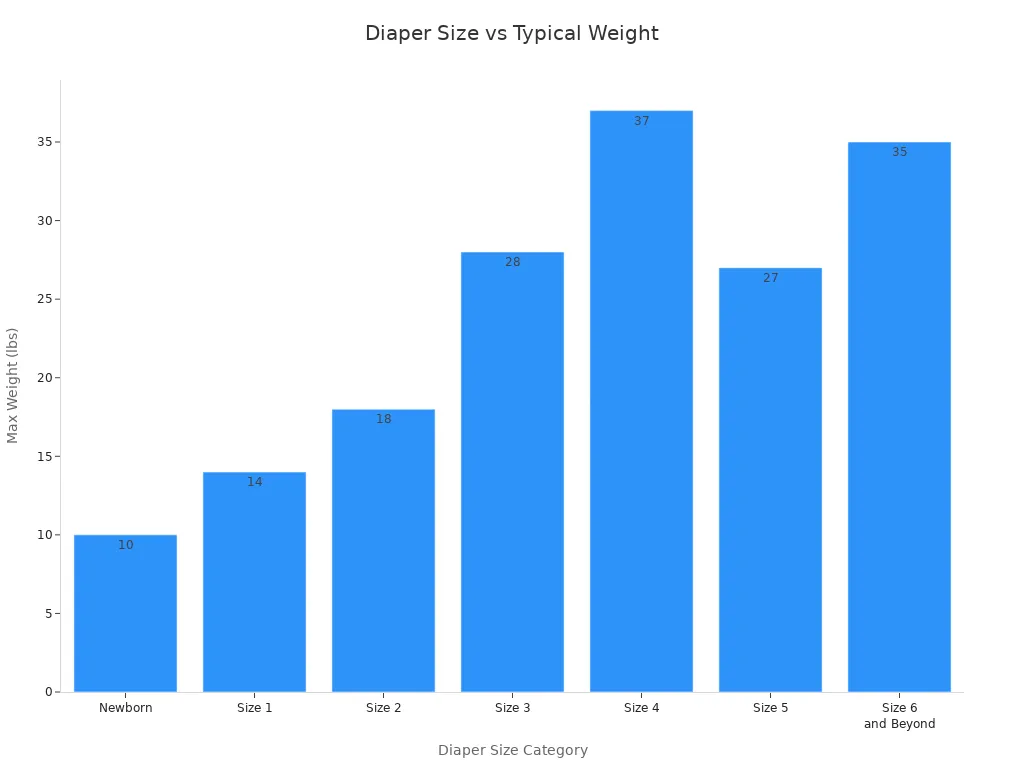
Change diapers every 2 or 3 hours. Newborns may need up to 12 changes each day. Always change the diaper right after your baby poops. Changing often keeps your baby’s skin healthy and helps stop rashes.
You want to save money and get good diapers. Disposable diapers cost about $960 to $1,200 each year. Cloth diapers cost more at first, but you can use them again and again. This saves money later. Fitted diapers and all-in-one diapers can cost more, but you may need fewer changes and less laundry.
To save money, figure out the cost for each diaper. Buying in big packs or using a subscription can help you spend less. Cheaper diapers are not always better if they leak or need more changes. TIANJIAO has many types of baby diapers. You can pick disposable or reusable ones for your family.
Tip: Pick diapers with strong absorbency and a good fit. This helps you avoid extra costs from leaks or more laundry.
You want your baby to feel dry and happy. Sometimes, you can make mistakes when picking diapers. Let’s talk about three mistakes and how to avoid them.
Many parents forget how important fit is. If diapers do not fit well, leaks happen. Your baby might get red marks on their legs or waist. Sometimes, diapers hang down right after you change them. Tabs are hard to close if the waistband is too small. Loose diapers can leak even if you pick the right size. If you ignore fit, your baby’s skin can get sore or have rashes. Tight diapers hold in wetness. Big diapers let messes move around and touch your baby’s skin.
Red marks show diapers are too tight.
Leaks mean the diaper does not cover well.
Sagging diapers are the wrong size.
Loose tabs can cause leaks.
You need to check for skin problems. Disposable diapers can bother skin if left on too long. A French health group found some disposable diapers have things that can hurt babies. Diaper rash happens when skin stays wet or touches poop for a long time. Bad absorption and tight diapers make rashes worse. Disposable diapers should keep your baby’s skin dry and safe.
Diaper rash comes from wet or dirty diapers.
Pee and poop can make skin sore.
Tight disposable diapers can make skin problems worse.
You may think cheap diapers save money. Sometimes, cheap disposable diapers need more changes. You spend more on extra diapers and washing clothes. For example, a cheap diaper costs less but needs ten changes a day. A better diaper costs more but needs fewer changes. Hidden costs are ruined clothes and more mess. Disposable diapers that leak make more work and stress. You want diapers that give good value, not just a low price.
Tip: Pick diapers for quality, fit, and skin safety. Price is important, but your baby’s comfort matters too.
You want your baby to have the best. Pick diapers that fit well and keep skin safe. Good absorbency is important too. Diapers help your baby move and play. They stop rubbing and keep your baby from feeling sore. Diapers make your day easier. Changing diapers is simple with the right ones. You feel less stress when diapers work well. Diapers give comfort and protect your baby. You use diapers every day. Trust yourself and follow these tips. The right diapers help you and your baby feel happy.
Diapers that fit well help babies move.
They stop rubbing and soreness.
They keep babies comfy all day.
Remember, picking good diapers helps you and your baby feel calm and happy.
You should check diapers every two to three hours. Change them right away if they are wet or dirty. This helps keep your baby comfortable and rash-free.
You can choose the right size by checking your baby's weight. Most diaper packages have a weight chart. If you see leaks or red marks, try a different size.
Yes, you can use diapers overnight. Pick ones with high absorbency. This keeps your baby dry and helps everyone sleep better.