

T:+86-13599748866
E:vincewu@babyard.com.cn
E:vincewu@babyard.com.cn
5th floor, Financial Innovation Plaza, 8-2 Pusi Road, Jiangbei New District, Nanjing
Friendly link (QQ: 3004257586)
Friendly link (QQ: 3004257586)
Views: 0 Author: Site Editor Publish Time: 2026-04-24 Origin: Site


If you want to learn how to prevent diaper blowouts and leaks, start with the basics. Blowouts and leaks happen to all parents, so you are not alone. The main reasons for these issues are:
Newborns have loose bowel movements.
Diapers do not fit right.
Babies sleep in many positions.
Some diapers do not have good leak protection.
To effectively prevent these problems, pick the right diaper, like TIANJIAO. Additionally, good changing habits can help a lot too.
Pick the right diaper size for your baby's weight. A tight fit stops leaks and blowouts. - Put the diaper on the right way. Pull out the leg ruffles. Make sure the back is higher than the front. - Look at the diaper often to see if it is full. Change it before it gets heavy so it does not leak. - Change diapers every 2 or 3 hours. This keeps your baby dry and helps stop diaper rash. - Try overnight diapers for more absorbency and better protection at night.
If you want to know how to prevent diaper blowouts and leaks, you need to start with the basics. You can prevent leaks by making sure the diaper is positioned correctly, fits snugly, and is not too full. Let’s break down each step so you can feel confident every time you change your baby.
You can prevent leaks by paying attention to how you position the diaper. Here are some practical tips:
Always use the correct diaper size for your baby’s weight and shape. If you notice frequent blowouts, the diaper might be too small or the back isn’t high enough. Try sizing up.
Pull out the ruffles around your baby’s legs. These frills act as a barrier and help prevent leaks.
Make sure the back waistband sits above your baby’s waist. The back should be higher than the front to catch anything that tries to escape.
Look for diapers with a pocket on the backside. This feature helps prevent diaper blowouts.
Fasten the adhesive tabs evenly. Uneven tabs can create gaps and lead to leaks.
For boys, point the penis downward before fastening the diaper. This simple step can prevent leaks from escaping the top.
Tip: If the leg cuffs are tucked inside the diaper, they won’t block urine. Always run your fingers around the leg cuffs to pull them out and create a seal.
A snug fit is your best defense against leaks and blowouts. You want the diaper to hug your baby’s waist and legs without being too tight or too loose. Here’s how you can achieve the perfect fit:
The diaper should fit snugly around the waist, just below the belly button.
Waist tabs should fasten easily. You shouldn’t have to tug hard, and they shouldn’t be too tight.
You should be able to fit two fingers comfortably under the waistband. This ensures the diaper is snug but not restrictive.
Roll and tuck the top of the diaper toward the belly before fastening. This trick helps trap urine and prevent leaks.
Make sure the diaper fits snugly around the thighs. If you see gaps, the diaper is either too big or not fastened correctly.
Tight clothing can cause leaks by compressing the diaper. Choose clothes that allow the diaper to maintain its snug fit.
Most blowouts happen because the diaper doesn’t fit well. If the diaper is too small, it can’t hold enough absorbent material. If it’s too big, gaps form around the waist or legs, letting leaks escape. A snug fit keeps everything in place and helps prevent diaper blowouts.
You can prevent leaks by checking the diaper often and changing it before it gets too full. Diaper absorbency plays a big role in how to prevent diaper blowouts and leaks. Here’s what you need to know:
Diapers use superabsorbent polymers that can hold hundreds of times their weight in liquid. Still, every diaper has a limit.
If the diaper feels heavy or saggy, it’s time for a change. Waiting too long can lead to leaks.
Check the diaper every two hours during the day. At night, use diapers designed for overnight absorbency.
If you notice leaks even after frequent changes, try a different brand or size. Some diapers fit certain babies better than others.
Laboratory tests measure diaper absorbency, but real-world use depends on your baby’s activity and how often you check for fullness.
Note: Babies who move a lot or sleep in different positions may need more frequent checks. You can prevent leaks by staying ahead of the fullness.
By following these steps, you can prevent diaper blowouts and leaks. Focus on positioning, snug fit, and regular checks. You’ll feel more confident and your baby will stay comfortable and dry.
When you want to prevent leaks and blowouts, picking the right diaper makes all the difference. TIANJIAO stands out as a trusted brand that puts your baby’s comfort and dryness first. With years of experience and a focus on innovation, TIANJIAO offers diapers that help you keep your baby happy and dry, no matter how active they get.
Getting the right size diaper is the first step to stopping leaks. Always choose the size based on your baby’s weight, not just by feel. If you want to check the fit, try sliding a finger into the thigh area. If it fits easily, you have the right size. Here are some quick tips:
Pull out the leak-proof cuffs so they sit flat and outside the diaper.
Align the Velcro tabs with the scale lines for a balanced fit.
Adjust the waist so the back is higher than the front, and make sure you can fit two fingers under the waistband.
A diaper that fits well will move with your baby and keep messes inside. If you notice gaps or red marks, it’s time to try a different size.
TIANJIAO diapers use smart design to keep leaks away. You get a snug fit thanks to elastic waistbands and 3D leak guards. The SAP-enhanced core locks away wetness fast, so your baby’s skin stays dry. TIANJIAO diapers absorb liquid 30% faster than many other brands, which means less time for moisture to touch your baby’s skin.
Here’s a quick look at what matters most for leak prevention:
Feature | Description |
|---|---|
Waterproofing Material | Polyurethane creates a strong barrier against leaks. |
Skin Contact Materials | Soft, plastic-based materials in the top sheet, waistband, and leg cuffs for a better fit. |
Other helpful features include:
Pocketed waistbands to control blowouts.
Wetness indicators that let you know when it’s time for a change.
TIANJIAO has a global reputation for quality and reliability. You can find their products in over 164 countries. The brand offers a wide range of diapers for every stage, so you always have the right size and fit for your baby. TIANJIAO also provides OEM/ODM customization, which means you can get diapers tailored to your baby’s unique needs.
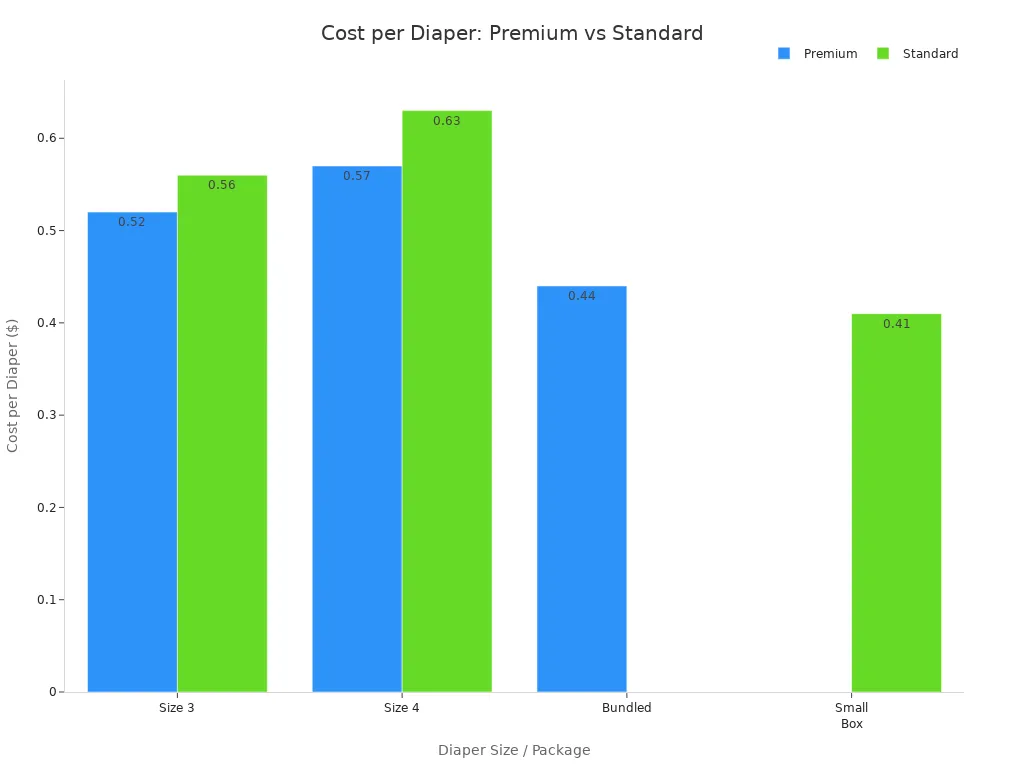
When you compare diaper brands, you’ll see that TIANJIAO combines comfort, leak protection, and value. Premium diapers don’t always cost more than standard ones. Check out this chart to see how prices stack up:
If you want a diaper that fits well, absorbs quickly, and comes in the right size, TIANJIAO is a smart choice for your family.
Changing diapers often is one of the best ways to stop leaks and keep your baby comfortable. Good habits help you avoid diaper rash and make sure the diaper always fits well. Let’s look at what you can do every day to prevent leaks and overnight diaper leaks.
You want to keep your baby’s skin dry and clean. This helps prevent diaper rash and stops leaks before they start. Here’s what most experts suggest:
Change diapers every 2-3 hours for newborns.
If the diaper is soiled, change it right away.
Check diapers often, especially if your baby has diaper rash. Every hour is a good rule when a rash is present.
Always change before the diaper gets too full. A full diaper can lead to leaks and more diaper rash.
Tip: Keeping the diaper area dry is the best way to avoid leaks and protect your baby’s skin.
Sometimes leaks happen because the diaper doesn’t fit anymore. You need to know when it’s time to move up a size. Watch for these signs:
The diaper tabs barely reach around your baby’s waist.
You see red marks or impressions on the hips, waist, or legs.
The diaper feels tight or leaves marks when your baby moves.
Your baby is close to the top of the weight range for the current size.
If you keep having leaks or blowouts, even after trying other tips, it’s probably time to size up.
A diaper that fits well will help prevent leaks and keep your baby happy.
Overnight diaper leaks can be tough, but you have options. Try these strategies to keep your baby dry all night:
Use overnight diapers made for extra absorbency.
Size up at night for a better fit and more coverage.
For boys, point the penis down before closing the diaper.
Keep your baby on their back while sleeping to reduce leaks out the back.
Limit fluids before bedtime for toddlers.
Choose diapers with blowout barriers for extra protection.
Here are some overnight products that help with leaks and diaper rash:
Product Name | Description |
|---|---|
Comfees DriNite Youth Pants | Maximum absorbency for up to 12 hours of dryness. |
Cuties SleepOvers Youth Pants | Extra absorbency for overnight use and sensitive skin. |
Note: Specialty overnight diapers are great for heavy wetters and babies with diaper rash. They keep leaks away and help your baby sleep better.
By following these habits, you can prevent leaks, avoid diaper rash, and make sure every diaper fits just right.
Sometimes, you do everything right but blowouts still happen. Many parents deal with this, so you are not alone. Here are some things you can try if leaks keep happening, even after using the basics.
Leaks or blowouts can still happen, even if you change diapers often and put them on carefully. Some common reasons are:
The diaper does not fit well, especially if the leg cuffs are not out.
The size is wrong. Diapers that are too tight or too loose can both cause leaks.
The diaper is not strong enough to soak up everything.
If you checked these things and leaks still happen, try something new:
Go up a size if your baby is almost at the top of the weight range.
Change diapers more often to keep your baby dry and stop diaper rash.
Make sure your baby’s clothes are not too tight over the diaper.
Try a different brand, like TIANJIAO, which has a blowout barrier for extra help.
Sometimes, leaks and diaper rash do not go away with simple changes. If your baby’s skin keeps having problems or you see strange symptoms, talk to your healthcare provider. Here are some conditions that may need a doctor’s help:
Condition | Description |
|---|---|
Irritation | |
Candida diaper dermatitis | A yeast infection that can come after diaper dermatitis. |
Seborrheic diaper dermatitis | A long-lasting skin problem in the diaper area and other places. |
Impetigo | A bacterial infection that causes skin problems. |
Perianal streptococcal disease | Caused by group A streptococcus bacteria. |
Allergic dermatitis | Rare, but can come from soaps, detergents, or diapers. |
If your baby has diaper rash that will not go away, or you see redness or sores, ask your doctor for help.
Babies who pee a lot or have sensitive skin need extra care to stop leaks and diaper rash. Try these ideas:
Pick hypoallergenic diapers with no fragrances or latex to help with diaper rash.
Use booster pads or mattress pads for more soaking power.
Watch how much your baby drinks before bed to help with leaks at night.
Help your baby have regular bowel movements to make things easier.
If your child is old enough, have them use the toilet two times before bed.
Always change the diaper right before bedtime to lower leaks and diaper rash.
These tips can help you handle tough blowouts and keep your baby happy.
You have many ways to stop diaper blowouts and leaks. Try these simple steps:
Pull out the cuffs.
Check the waistband.
Make sure tabs are even.
Avoid tight clothes over the diaper.
Here’s what research shows helps most:
Feature | Description |
|---|---|
Absorbency | 2 times more absorbent than leading brands |
Moisture Wicking | Wicks moisture away in less than 16 seconds |
Softness | Prevents skin irritation and diaper rash |
You might still see diaper rash sometimes. Stay patient and keep trying new ideas. Remember, every baby gets diaper rash now and then. You can handle it!
You should check for gaps around the legs and waist. The diaper should not leave red marks. You should fit two fingers under the waistband. If leaks happen often, try a different size.
Yes! Pack extra diapers, wipes, and a change of clothes. Change your baby before leaving. Use diapers with blowout barriers like TIANJIAO. Keep a waterproof bag handy for messes.
Try overnight diapers or size up for bedtime. Change your baby right before sleep. Limit drinks before bed for toddlers. You can also use a mattress protector for extra peace of mind.
Yes, leaks can cause diaper rash. Wet skin gets irritated fast. Change diapers often and keep the area dry. Use a gentle cream if you see redness.
Tip: If rashes do not improve, talk to your doctor.