

T:+86-13599748866
E:vincewu@babyard.com.cn
E:vincewu@babyard.com.cn
5th floor, Financial Innovation Plaza, 8-2 Pusi Road, Jiangbei New District, Nanjing
Friendly link (QQ: 3004257586)
Friendly link (QQ: 3004257586)
Views: 0 Author: Site Editor Publish Time: 2026-04-24 Origin: Site


Normal baby pee is pale yellow. It smells mild or has almost no smell. Wet diapers show your baby is hydrated and healthy. Changes in pee color or smell can mean a problem. Peeing less or more often can also be a sign. Some parents believe myths about urine. They think urine is always sterile. They also think collecting urine is hard. Urine can pick up bacteria as it leaves the body. You can collect urine with simple methods. If you want help with Understanding Baby Pee: Wet Diapers, look for signs. Ask your doctor if you feel unsure.
Normal baby pee is light yellow and smells soft. This shows your baby drinks enough and has healthy kidneys.
Look at your baby's wet diapers every day. Healthy babies have 5 to 8 wet diapers in one day. Less than 6 wet diapers can mean your baby is dehydrated.
Use a urine color chart to watch for changes. Dark yellow or orange pee can mean dehydration. Red or brown pee needs a doctor right away.
Pee that smells strong can mean dehydration or infection. If the smell changes fast, call your doctor.
Keep track of how often your baby pees. If your baby does not pee in the first day or has other warning signs, get medical help.
Image Source: pexels
When you check your baby's diaper, you do more than just keep them clean. You learn important information about their health. Understanding baby pee: wet diapers helps you see if your baby gets enough fluids. Most healthy babies have at least 5 to 8 wet diapers each day. This number shows that your baby is well-hydrated.
Tip: If you notice fewer than 6 wet diapers in 24 hours, you should pay attention. This can be an early sign of dehydration.
You can use this simple chart to track your baby's wet diapers during the first week:
Day | Minimum Wet Diapers |
|---|---|
1 | 1 |
2 | 2 |
3 | 3 |
4 | 4 |
5 | 5 |
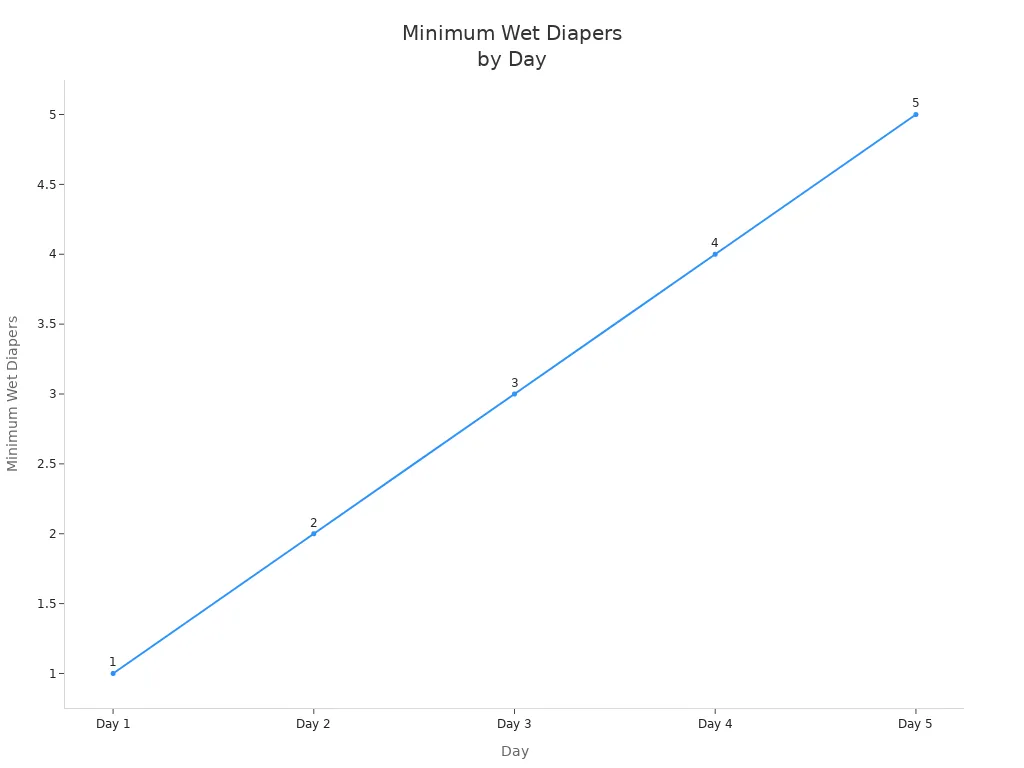
Pediatricians recommend that you count wet diapers to check feeding and hydration. If your baby has fewer wet diapers than expected, it may mean missed feeds or other concerns. TIANJIAO’s high-quality diapers make it easy to spot wetness and track changes in baby pee. Their design helps you stay alert to your baby's needs.
Understanding baby pee: wet diapers also helps you spot signs of dehydration. Babies should have 6 to 8 or more wet diapers every 24 hours. Less than 6 wet diapers can mean your baby needs more fluids. Severe dehydration can show up as only 2 or fewer wet diapers in 8 hours.
5–8 wet diapers in 24 hours: Good hydration
5–6 wet diapers: Mild dehydration risk
3–4 wet diapers: Moderate dehydration risk
2 or fewer wet diapers in 8 hours: Severe dehydration risk
Understanding baby pee: wet diapers gives you a simple way to protect your baby's health. If you see a drop in wet diapers, check for other signs of dehydration like dry mouth or sunken eyes. TIANJIAO diapers help you monitor these changes with ease, supporting your baby's comfort and well-being.
You can learn about your baby's health by looking at their pee color. Healthy baby pee is usually light yellow or pale straw. This color shows your baby is getting enough fluids. It also means their kidneys are working well. Breastfed babies often have lighter pee. Formula-fed babies usually have darker pee. The difference comes from what is in breast milk and formula. These ingredients change the urine color and smell.
A urine color chart helps you compare diaper pee to normal colors. Most baby pee is light to dark yellow. Newborns cannot concentrate urine well, so their pee is very pale. As babies grow, their kidneys get stronger. Their pee may look a bit darker. Things like temperature and humidity can change pee color. Hot weather or dry air makes babies lose more fluids. This can make their pee darker.
Tip: TIANJIAO diapers help you see pee color changes fast. Their absorbent design lets you check urine color easily. This helps you watch your baby's hydration.
You might see other colors in your baby's pee. Some colors are safe, but others need a doctor's help. Use a urine color chart to know what each color means.
Urine Color | Possible Causes |
|---|---|
Light Yellow | Good hydration, healthy kidneys |
Dark Yellow | Mild dehydration, needs more fluids |
Orange | Bile, urates, certain medications, dyes |
Deep Yellow/Brown | Bile, bilirubin, medications, vitamins, foods |
Red or Brown | Blood in urine, kidney problems, needs medical evaluation |
Blue | Rare disorder (blue diaper syndrome), needs medical evaluation |
Watch for pee color changes that last or look strange. Most color changes are safe and come from food or medicine. If you see red, brown, or cloudy pee, call your doctor. Changes that last more than one or two days need a checkup. Blue pee can happen with blue diaper syndrome. This is a rare disorder linked to tryptophan breakdown.
Formula-fed babies often have darker pee and stronger smell.
Breastfed babies usually have lighter pee and mild smell.
Dark yellow or orange pee may come from mild dehydration or some foods and medicines.
You can use a urine color chart to track pee changes. If you see dark yellow, give more fluids to lighten the color. TIANJIAO diapers help you spot these changes quickly. This lets you protect your baby's health.
Note: If your baby's pee color changes suddenly or lasts more than two days, call your doctor. Acting early keeps your baby safe.
You may notice that baby pee usually has a very mild or almost no odor. This is a sign of normal urine. When your baby is healthy and well-hydrated, you will see clear urine with a pale yellow color. The urine smell should not be strong or unpleasant. Breastfed babies often have even less odor in their pee. Formula-fed babies might have a slightly stronger urine smell, but it should still be gentle.
Clear urine means your baby is getting enough fluids. You can check the color in the diaper to make sure it looks light yellow. If you see clear urine and do not notice a strong smell, you can feel confident that your baby is healthy. Normal baby pee should not stain the diaper or leave a lasting odor.
Sometimes, you might notice a change in urine smell. Strong-smelling urine can be a sign that something is different. You should pay attention if the odor becomes sharp, foul, or unusual. Several things can cause this change:
Some foods and spices, like asparagus, can change urine smell.
Dehydration can make baby pee smell like ammonia.
A foul odor may point to a bacterial infection, such as a urinary tract infection.
A musty urine smell can suggest liver disease or a metabolic disorder.
Sweet or fruity urine smell may signal diabetes.
If you notice strong-smelling urine that does not go away, check the color of the pee. Darker color and a strong odor together can mean your baby needs more fluids or medical attention. Clear urine with a mild smell is a good sign. If you see cloudy pee, blood, or a sudden change in color, call your doctor. Always trust your instincts and ask for help if you feel worried about your baby's urine smell or color.
You may wonder how often should my baby pee. The answer depends on your baby's age. Newborns usually urinate up to 10 times a day. As your baby grows, the frequency decreases, but the amount of urine increases. This change shows that your baby's urinary system is developing.
You can use the following table to check the average number of wet diapers per day:
Baby's Age | Average Diapers Per Day |
|---|---|
Newborn (0-1 Month) | 10 - 12 |
1-5 Months | 8 - 10 |
6+ Months | 6 - 8 |
If your baby is peeing a lot, you can feel confident that they are well-hydrated. You should see pale yellow color in the diaper. TIANJIAO diapers are designed for high absorbency and comfort. These diapers help you check baby pee often and spot any changes in color or frequency.
Tip: Count wet diapers each day. This habit helps you track your baby's hydration and health.
You may notice that your baby isn't peeing much. This can be a sign of dehydration or other health issues. If your baby does not pee in the first 24 hours, you should call your doctor. Sudden changes in urination habits also need medical attention.
Here is a quick guide for when to seek help:
Evidence | Description |
|---|---|
Not peeing in the first 24 hours | Possible urinary tract problem; call your doctor |
Sudden variations in habits | Unexpected changes; consult your doctor |
Normal urination range | 4-8 wet diapers a day is normal for most babies |
You should also watch for changes in color. If you see dark yellow or orange pee, your baby may need more fluids. If you notice red or brown color, call your doctor right away. Tracking baby pee helps you spot problems early.
TIANJIAO diapers make it easy to monitor your baby's pee. Their absorbency lets you check color and frequency without leaks or discomfort. If you ever feel unsure, trust your instincts and reach out to your healthcare provider.
Watch your baby's pee for sudden changes in color or smell. Some colors mean you need to get help fast. The table below shows which colors need urgent care:
Urine Color | Possible Condition |
|---|---|
Red or Pink | Suggests blood in the urine |
Dark Yellow or Amber | Indicates dehydration |
Blue or Green | Rarely seen, could be due to medications or food dyes |
Red or pink pee can mean there is blood. Dark yellow or amber pee can show dehydration. Blue or green pee is rare and may come from medicine or food dyes. Call your doctor if you see any of these colors. Sometimes, pee smells strong or strange. A maple syrup smell can mean maple syrup urine disease. This is rare but very serious. Fruity-smelling pee may mean high blood sugar or diabetes. These smells need quick medical help.
Cloudy pee is another thing to watch for. Cloudy pee with a strong smell can mean infection or other problems. If you see cloudy pee, call your pediatrician.
Look for other symptoms that happen with changes in pee color or smell. These signs help you know when to call the doctor:
Trouble breathing
Severe allergic reactions
Feeling very tired or weak
Confusion or acting strange
Sudden anger or emotional upset
Head injury
Vomiting or diarrhea that does not stop
Rashes with fever
Check for less pee, dry mouth, no tears, tiredness, and sunken eyes. These signs can mean dehydration. If you think your baby is dehydrated, get help right away. Irritability, fever, peeing more often, pain while peeing, blood in pee, cloudy pee, and strong-smelling pee are all reasons to call your doctor. Blood in pee, cloudy pee, or strong smell are clear warning signs.
Tip: If you see sudden changes in color, frequency, or smell, trust yourself and call your healthcare provider. Acting early keeps your baby safe.
You can spot healthy baby pee by looking for pale yellow color, mild smell, and regular wet diapers. Some changes are normal, like darker urine in the first days or after certain foods. Watch for these warning signs:
Pain or distress when peeing
Red, brown, or cloudy urine
If you see these, call your doctor. TIANJIAO diapers help you track changes easily and keep your baby comfortable every day.
You can check for these signs:
Fewer than 6 wet diapers in 24 hours
Dry mouth or lips
Sunken eyes
No tears when crying
Call your doctor if you see these signs.
Yes, baby pee can look lighter in the morning and darker later. This happens because your baby may drink more or less at different times. You should watch for sudden or lasting color changes.
First, check if your baby is drinking enough fluids. Strong smells can come from dehydration or certain foods. If the smell stays strong or you see other symptoms, call your doctor.
Yes, some diapers have color-changing indicators. TIANJIAO diapers make it easy to spot changes in pee color. Always check the diaper in good light for the most accurate view.