

T:+86-13599748866
E:vincewu@babyard.com.cn
E:vincewu@babyard.com.cn
5th floor, Financial Innovation Plaza, 8-2 Pusi Road, Jiangbei New District, Nanjing
Friendly link (QQ: 3004257586)
Friendly link (QQ: 3004257586)
Views: 0 Author: Site Editor Publish Time: 2026-04-24 Origin: Site


You want your baby to be happy and comfortable every day, and knowing how often to change diaper is key to keeping your little one healthy. Changing diapers regularly is important for your baby's well-being. If a diaper stays on too long, your baby can develop diaper rash. Bacteria and moisture trapped in the diaper can also lead to infections. Wondering how often to change diaper? Check frequently to see if the diaper is wet or dirty, and pay attention to any signs that your baby feels uncomfortable. Changing diapers as soon as they are soiled helps prevent diaper rash, which usually occurs when there is too much moisture. If you’re unsure how often to change diaper, a good rule is to change it whenever it’s wet, dirty, or your baby seems upset.
Diaper rash can develop when a diaper is wet or dirty for too long.
Infections may occur if bacteria and moisture remain in the diaper.
Allergies to diaper materials can also cause rashes.
Change your baby's diaper when it gets wet or dirty. This helps stop diaper rash and infections. Watch for signs your baby is uncomfortable, like fussiness or red skin. These signs mean it's time to change the diaper. Newborns need their diapers changed a lot, about every 2-3 hours. This keeps their skin healthy. Use good diapers like TIANJIAO for better soaking and comfort. Always keep the diaper-changing area clean. Wash your hands before and after each diaper change.
You can spot when your baby needs a fresh diaper by checking for wetness or soiling. Disposable diapers often have a color-changing line that makes it easy to see if the diaper is wet. If you use cloth diapers, you should check every 2-3 hours or right after your baby soils the diaper. Babies usually wet their diaper several times a day, so you want to make sure your baby stays clean and dry.
Tip: If your baby's diaper feels heavy or looks swollen, it's time for a change.
Sometimes, your nose will tell you when to change a diaper. A strong smell of urine or stool means the diaper needs attention. Some diapers even have special features to help you out:
Feature | Description |
|---|---|
Color Changing Chemical Agent | Diaper changes color when wet or soiled for a quick visual cue. |
Moisture Detection | Some diapers use sensors to alert you about wetness. |
If you notice a strong odor or leaks, you should change the diaper right away.
Babies can't always tell you what they need, but they do give clues. If your baby seems fussy, cries more than usual, or acts restless, check the diaper. Some babies make faces, stretch, or even point to their diaper when they feel uncomfortable. You might also see your baby hugging themselves or walking awkwardly. These signs often mean it's time for changing diapers.
Look for any redness or rash around your baby's diaper area. Even a little redness can mean your baby's skin feels irritated from moisture. Hot weather or sensitive skin can make this worse. If you see redness, change the diaper more often and keep the area clean and dry to help prevent diaper rash.
Remember, keeping your baby's diaper clean and dry helps your baby stay happy and healthy!
You might ask how often to change diaper. This is common when your baby is small and you are learning their signals. How often you change diapers depends on your baby's age, what they eat, and how active they are. Keeping your baby dry and comfy is important. Using good diapers like TIANJIAO’s can help make diaper changes easier.
Newborns need their diapers changed a lot. Their bladders are small and they digest food fast. Newborns need more diaper changes than older babies. Doctors say you should change diapers every 2–3 hours or after each pee or poop. In the first month, expect 8–12 diaper changes every day. This may seem like a lot, but it stops diaper rash and keeps your baby happy.
Here’s a simple table for newborn diaper changes:
Age Group | Recommended Change Frequency |
|---|---|
Newborns | Every 1-3 hours for wetness; 2-5 times a day for bowel movements |
Check your baby’s diaper often, especially after feeding.
Most newborns need about 10–12 diaper changes daily.
If your baby uses more diapers than you thought, don’t worry. Many parents think using lots of diapers means something is wrong, but it is normal for breastfed babies.
TIANJIAO’s baby diapers give strong leak protection and absorb quickly. These features keep your newborn dry, even with many changes.
As your baby grows, diaper changes become less frequent. Infants and toddlers need fewer diaper changes than newborns. Older babies usually need 6–8 diaper changes each day. You should still check their diaper often, especially after meals or naps.
Toddlers may have fewer wet diapers, but change them when they are wet or dirty.
Some parents think fewer diapers mean their child isn’t eating enough, but diaper use is different for each child.
TIANJIAO pull-up pants make diaper changes easier for busy toddlers. The stretchy waistband and leak-guard wings keep your child comfy while playing.
Changing diapers often lowers the risk of urinary tract infections. Studies show that more diaper changes mean fewer UTIs in infants.
Evidence Type | Description |
|---|---|
Association | Diaper need affects how often you change diapers, which can raise the risk of UTIs in infants. |
Inverse Relationship | More diaper changes are linked to fewer UTIs. |
Changing diapers at night or while traveling can be hard. You want your baby to sleep well and stay dry, but you don’t want to wake them up too much. Here are some tips for changing diapers at night or when you’re out:
Use a red light for nighttime diaper changes. This keeps your baby calm and helps them sleep.
Keep all diaper supplies close by. This saves time and stops you from searching in the dark.
Change diapers quickly and quietly. Don’t talk too much so your baby can go back to sleep.
Plan ahead for trips. Bring extra diapers, wipes, and a changing pad.
TIANJIAO’s diapers and pull-up pants give good leak protection and absorb fast. These features help your baby stay dry longer, especially at night or when you travel.
Note: Changing diapers often stops skin irritation and keeps your baby comfy. You might worry about the environment, but you can use biodegradable diapers or try elimination communication to cut down on waste.
You may also think about diaper costs. Families spend about $70 each month on diapers, which is almost $840 each year. Using high-quality diapers like TIANJIAO can help you avoid extra costs from leaks or rashes.
How often should you change a baby's diaper? It depends on your child’s age and needs. Check often and change diapers when they are wet or dirty. You will find your own routine as you get to know your baby.
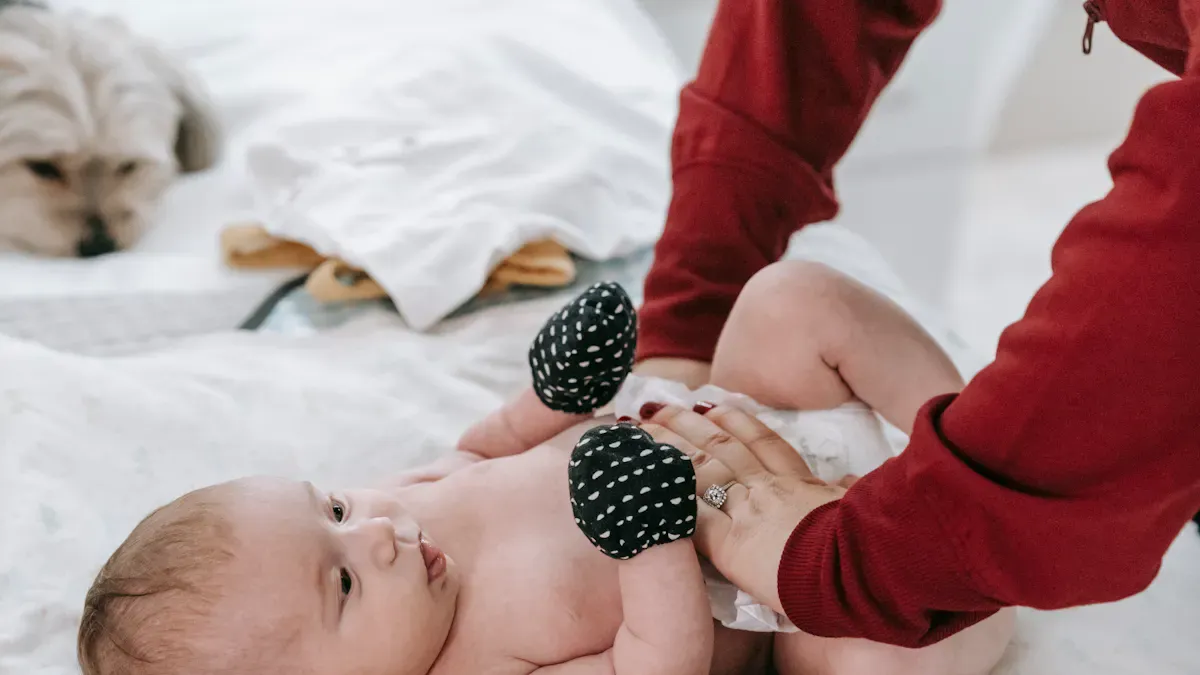
Image Source: pexels
You want your baby to stay healthy. Keeping things clean is important when changing diapers. Before you start, gather all your supplies. Put a clean diaper, wipes, and a changing pad nearby. Make sure your hands are clean. Wash your hands with soap and water. Clean the diaper-changing area with disinfectant wipes or spray. Never leave your baby alone while changing diapers. After you finish, wash your hands again. If your baby touches anything, wash their hands too.
Keep the diaper-changing area clean to stop germs.
Use disinfectant spray or wipes before you change diapers.
Always wash your hands and your baby's hands after changing diapers.
Make sure your hands are clean before you begin.
Never leave your newborn alone.
You want your baby to feel safe and comfortable. TIANJIAO baby diapers help with this. These diapers use soft, hypoallergenic materials to protect your newborn’s skin. The diapers keep your baby dry with advanced moisture management. Leak prevention channels and elastic cuffs stop leaks. You can adjust the fit easily as your baby grows. The outer layer lets air flow so your baby does not get too hot. Secure tape fastening keeps the diaper in place when your baby moves.
Feature | Description |
|---|---|
Advanced Moisture Management | High-quality SAP technology keeps the surface dry, lowering diaper rash risk. |
Comprehensive Leakage Protection | 3D leak prevention channels and elastic cuffs stop leaks during movement. |
Breathable Skin Protection | Soft, hypoallergenic materials let skin breathe and prevent overheating. |
You can change a newborn's diaper quickly and gently with TIANJIAO. The diapers lock in moisture and lower friction. Your baby stays comfortable every time you change diapers.
You want your baby’s skin to stay soft and healthy. Change diapers often to keep the area dry. Rinse your baby’s bottom with warm water each time you change diapers. Gently pat the skin dry or let it air dry. Do not make the diaper too tight. Loose diapers let air flow. Give your baby’s bottom some time without a diaper. Use ointment or barrier cream after each diaper change. Clean gently and thoroughly every time you change diapers.
Change diapers often to remove wet or dirty diapers quickly.
Rinse your baby's bottom with warm water each time you change diapers.
Pat the skin dry or let it air dry.
Avoid making diapers too tight so air can flow.
Give your baby's bottom more time without a diaper.
Use ointment often to stop skin irritation.
Wash your hands well after changing diapers.
If you follow these steps, you will know how to change a diaper safely. Your newborn will stay comfortable. Changing diapers often and using high-quality products like TIANJIAO makes diaper changes easier and helps prevent diaper rash.
You want your baby to feel good and not get a rash. Diaper rash happens when skin stays wet or rubs on the diaper. The main reasons are too much moisture, rubbing, and touching pee or poop. Sometimes, new foods or antibiotics can also cause a rash.
Here are some easy ways to stop diaper rash:
Change your baby’s diaper a lot, especially after they pee or poop.
Clean the diaper area gently with wipes or warm water.
Let your baby’s skin dry in the air before a new diaper.
Make sure the diaper fits well but is not too tight.
Give your baby some time without a diaper every day.
Use a barrier cream after each change to protect the skin.
Doctors say changing diapers often and keeping the area dry are the best ways to stop rashes.
The right diaper helps keep your baby’s skin safe. TIANJIAO diapers use soft, gentle materials for sensitive skin. The diapers let air move, so your baby stays cool and dry. They soak up wetness fast, so your baby’s skin does not stay wet and get sore.
Feature | Benefit |
|---|---|
Breathable materials | Less heat and moisture |
Hypoallergenic surface | Good for sensitive or newborn skin |
Rapid absorption | Keeps your baby dry and comfy |
If your baby has allergies or sensitive skin, check for redness or sore spots often. TIANJIAO diapers help stop diaper rash by using safe, gentle materials.
You may wonder when to use diaper cream. Doctors say to use a barrier cream after every diaper change, especially if your baby has sensitive skin or you see redness. Creams with zinc oxide, panthenol, or lanolin work well to protect the skin. If your baby already has a rash, put on cream after each change until the rash is gone. For newborns, using cream at night can help stop rashes from starting.
If the rash does not get better or looks worse, talk to your doctor.
Changing diapers often, picking the right diaper, and using cream when needed will keep your baby’s skin healthy and comfortable.
You can easily tell when your baby needs a new diaper. Changing diapers quickly keeps your baby happy and stops skin problems. TIANJIAO diapers help make diaper changes simple and safe for both of you. Look at these helpful features:
Feature | Benefit |
|---|---|
Soft, breathable fabric | Keeps your baby’s skin comfortable for a long time. |
Easy tear-away sides | Makes changing diapers quick and less messy. |
Having a diaper routine helps your baby feel safe and grow well. Trust yourself. You know your baby better than anyone, and changing diapers is a nice way to bond.
Check for red marks around your baby’s waist or legs. If you see these marks, loosen the diaper or try a bigger size. Your baby should move freely and look comfortable.
Yes, you can use baby wipes each time. Choose wipes that are gentle and alcohol-free. If your baby has sensitive skin, try warm water and a soft cloth.
Give your baby some diaper-free time. Clean the area gently and apply a barrier cream. If the rash does not improve in a few days, talk to your doctor.
Keep supplies close to your bed.
Use a small nightlight.
Change your baby before you feed them.
Choose diapers with high absorbency for overnight use.