

T:+86-13599748866
E:vincewu@babyard.com.cn
E:vincewu@babyard.com.cn
5th floor, Financial Innovation Plaza, 8-2 Pusi Road, Jiangbei New District, Nanjing
Friendly link (QQ: 3004257586)
Friendly link (QQ: 3004257586)
Views: 0 Author: Site Editor Publish Time: 2026-07-31 Origin: Site


Overnight incontinence takes a severe physical and emotional toll on everyone involved. Caregivers experience deep fatigue from relentless midnight bedding changes. Users suffer from chronically interrupted sleep and severely compromised skin health. Daytime management differs vastly from overnight requirements. When we lie down to rest, fluid volume, duration, and body position shift dramatically. Gravity no longer pulls moisture downward into the absorbent core. Instead, fluids pool aggressively along the sides and back. You need specialized solutions designed specifically to handle these horizontal dynamics. This article provides an evidence-based framework for evaluating, selecting, and properly utilizing high-capacity Adult Diapers for nighttime reliability. We will explore core evaluation criteria, critical sizing realities, and practical implementation steps. You will learn exactly how to build a leak-proof routine.
Standard daytime incontinence products lack the targeted fluid retention necessary for 8+ hours of horizontal sleep, leading to pooling and leaks.
High absorbency is determined by Super Absorbent Polymer (SAP) ratios, not just product bulk or thickness.
Proper sizing and leg-gather fit are as critical as absorbency ratings; buying a size up often causes leaks rather than preventing them.
The choice between tab-style briefs and pull-on underwear should be dictated by the user’s mobility level and caregiver assistance needs.
We often assume standard daytime products work perfectly well for nighttime use. They do not. Daytime products fail repeatedly under overnight conditions. Understanding the physical mechanics behind these failures helps you avoid costly mistakes.
Fluid dynamics change completely when you lie down. Standard daytime options rely heavily on gravity. They expect the wearer to remain upright, pulling fluid directly downward into the crotch. Overnight products face a much tougher test. They must absorb rapidly across the rear and sides. Sleepers roll, toss, and turn. Fluids travel along horizontal pathways quickly. If the product cannot catch this sideways flow instantly, it escapes the edges. You must choose garments engineered to capture multidirectional flow.
Moisture exposure damages fragile tissue rapidly. When standard products fail to wick moisture away quickly, the skin remains damp for hours. This creates severe maceration risks. Prolonged dampness strips away the skin's natural protective barrier. It often triggers incontinence-associated dermatitis (IAD). Over time, this damp friction accelerates the formation of painful bedsores. You must prioritize rapid wicking to keep the epidermis dry. Maintaining optimal skin pH relies entirely on isolating wetness away from the body.
Lower-tier products seem cheaper initially. However, their hidden costs accumulate rapidly. You end up doing excessive laundry every single morning. Acidic urine destroys expensive mattresses over time. Furthermore, fragmented sleep creates serious health impacts. Both users and caregivers suffer from cognitive decline and chronic fatigue. Investing in premium Adult Diapers prevents these compounding issues. Spending a little more on proper overnight protection actually saves money long-term.
Marketing claims often confuse buyers. Brands toss around vague terms. You must understand the underlying technology to make informed decisions.
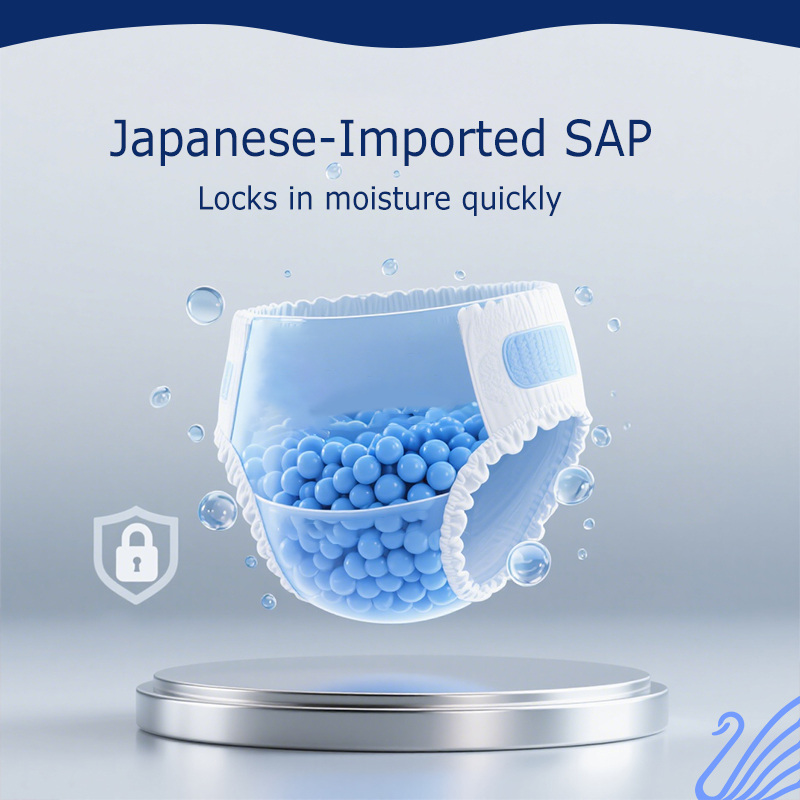
Many people equate product thickness directly to absorbency. This is a common misconception. Advanced Super Absorbent Polymers (SAP) dictate true performance. SAP consists of tiny, chemically cross-linked beads. They hold hundreds of times their own weight in liquid. They lock moisture in and neutralize acidic pH levels. Conversely, traditional fluff pulp merely holds liquid like a basic sponge. It creates incredibly bulky products. Worse, fluff pulp releases trapped liquid under body pressure. When you roll over, it squeezes moisture right back against the skin. High-quality products use high SAP ratios for maximum retention. Always prioritize polymer density over fluff volume.
Volume limits only tell half the story. Wicking speed matters just as much. The acquisition layer must pull fluid into the core instantly. Fast wicking prevents sudden heavy leakage from escaping the leg holes. If a product absorbs slowly, fluids pool directly on the surface. They will spill over the physical barriers before the core ever activates. Quick absorption rates keep sleepers dry even during heavy voiding episodes.
Side-sleepers need specialized physical barriers. Dual-layered, hydrophobic leg cuffs form this structural necessity. These tall leak guards stand up inside the leg openings. They channel rogue fluids back down into the absorbent core safely. Without robust leak guards, side-sleeping practically guarantees messy mornings. You should visually inspect these gathers when evaluating new brands.
You need realistic expectations regarding capacity ratings. Many brands advertise laboratory maximum capacity. Laboratories test this using the ISO method (typically the Rothwell method). They submerge the entire product completely in liquid. No human voids fluid this way. You must focus on practical working capacity instead. Working capacity represents the usable absorbency before a leak actually occurs. It usually sits at roughly 50% to 60% of the stated ISO maximum. Understanding this distinction prevents sudden disappointments.
Selecting the correct format depends strictly on the user's physical situation. Do not base this choice purely on personal preference. Functionality must dictate the final decision.
Pull-ons mimic standard underwear closely. They feature an elastic waistband.
Best for: Mobile individuals, active side-sleepers, and those who handle their own toileting independently.
Limitations: They prove much harder to change in bed. Caregivers must remove pants and shoes completely. They also generally possess a slightly lower maximum capacity than heavy-duty tabbed briefs.
Tabbed garments open completely flat. You secure them using side tapes.
Best for: Bedbound individuals, those requiring caregiver assistance, and severe heavy leakage scenarios.
Advantages: Caregivers can change them easily without removing the user's lower garments. They provide a highly customizable fit around the waist and thighs. They also offer highly scalable absorbency limits.
We created a simple decision matrix to help you choose. Evaluate mobility, waist-to-hip ratios, and nighttime output volumes carefully.
Mobility Level | Caregiver Assistance | Nighttime Output | Recommended Format |
|---|---|---|---|
High (Independent) | None Required | Moderate to Heavy | Pull-On Underwear |
Limited / Walker Use | Occasional Support | Heavy | Tab-Style Briefs |
Bedbound | Full Routine Support | Severe | Tab-Style Briefs |
People constantly struggle with sizing. Improper sizing ruins even the most expensive products on the market. Precision matters immensely here.
Many consumers hold a dangerous misconception. They believe larger sizes naturally offer more absorbency. This is the "size up" fallacy. Sizing up creates critical gaps directly at the leg openings. When the leg gathers do not touch the skin, fluids escape immediately. Sizing up practically guarantees leaks regardless of product quality. You must prioritize a snug fit over arbitrary capacity concerns. Always select the size tailored to the body's actual dimensions.
Guessing sizes based on regular clothing leads to failure. Follow these actionable steps for precise measurements:
Use a flexible tailor's measuring tape.
Measure the natural waist, usually right across the belly button.
Measure the widest part of the hips and buttocks.
Compare the two numbers carefully.
Always let the larger of the two numbers dictate the size you purchase.
Keep a record of these measurements. Human bodies change over time. Re-measure every few months to ensure continued accuracy.
You must verify the fit after putting the product on. A proper fit looks incredibly specific. It rests snugly against the groin without pinching. The fasteners or tabs should rest symmetrically on the hips. You should see absolutely no sagging in the rear profile. Run a single finger along the leg elastics. They must lie flat against the skin without digging in painfully. If you notice bunching, adjust the application immediately.
Technology alone cannot stop every leak. You must implement proven application techniques. Caregiver consistency prevents disaster.
Never apply a product flat straight out of the bag. You must prepare it first. Fold the garment in half lengthwise. This action forms a taco or boat shape. We call this essential technique "cupping." Cupping activates the inner leak guards mechanically. It forces them to stand upright away from the core. It also creates a natural channel for immediate fluid capture. This one simple step stops countless side leaks.
Some medical situations demand extreme absorbency. You can safely scale capacity using flow-through booster pads. Do not use standard incontinence pads for this purpose. Standard pads contain plastic outer backings. They will trap fluid and cause side leaks immediately. True booster pads lack a moisture barrier entirely. They absorb what they can and let the rest flow through into the main garment safely. Layer them carefully along the primary strike zone.
You can reduce bladder output significantly through strategic hydration. Offer balanced advice to your loved ones. Hydrate adequately during the active daytime hours. However, begin tapering fluid intake exactly two hours before sleep. This simple timing adjustment minimizes overnight bladder pressure naturally. It decreases the overall volume the garment must handle. Always consult a physician before altering daily fluid intake routines.
Even perfect systems fail occasionally. We highly recommend building a secondary defense layer. Use breathable waterproof mattress protectors on every bed. Place absorbent bed pads, commonly known as chux, directly under the sleeper. These back-up systems reduce caregiver anxiety immensely. They make unexpected midnight changes much faster and far less stressful. You can simply swap the pad instead of stripping the entire bed.
Achieving a completely dry night requires deliberate balance. You must combine product technology, like advanced SAP and high working capacity, with proper physical implementation. Focus deeply on precision sizing, snug fit, and the right format for your specific mobility level.
Verify personal measurements using both waist and hip dimensions before ordering any product.
Always fold and "cup" the product prior to application to activate vital leak barriers.
Select tab-style formats for bedbound individuals to significantly ease caregiver strain.
Utilize flow-through booster pads and waterproof chux for severe overnight output management.
Never commit to bulk purchases blindly. Always request samples from reputable brands first. Test the fit thoroughly and evaluate the wicking speed under real sleep conditions. Building absolute confidence takes a little trial and error, but a full night of restorative sleep is well worth the effort.
A: No, you should never double up. Most products feature a completely waterproof outer plastic or cloth-like backing. This barrier prevents flow-through entirely. The top garment will fill up rapidly and immediately leak out the sides. Use a specialized flow-through booster pad inside a single high-capacity garment instead.
A: A true high-absorbency overnight product is designed specifically for undisturbed 8-hour wear. Unless a bowel movement occurs, you do not need to change it. Unnecessary midnight changes disrupt vital sleep cycles. Trust the Super Absorbent Polymers to keep the skin safe and dry until morning.
A: Premature leaking almost always stems from user error or poor physical fit. Reiterate the importance of checking leg gathers carefully. You likely selected a size too large, creating open gaps. Additionally, ensure you properly unfolded and "cupped" the product before use to activate the standing leak guards.