

T:+86-13599748866
E:vincewu@babyard.com.cn
E:vincewu@babyard.com.cn
5th floor, Financial Innovation Plaza, 8-2 Pusi Road, Jiangbei New District, Nanjing
Friendly link (QQ: 3004257586)
Friendly link (QQ: 3004257586)
Views: 0 Author: Site Editor Publish Time: 2026-07-16 Origin: Site


The global incontinence market is expanding rapidly as aging populations grow. However, generic private-label products are struggling to compete. Consumers now demand specialized, high-performance care rather than basic alternatives.
Brand owners face a severe gap between product concepts and manufacturing reality. They constantly struggle against inconsistent absorbency. Poor user fit is another frequent hurdle. Rigid minimum order quantities (MOQs) further stifle market innovation and erode consumer trust.
Transitioning to a true Original Equipment Manufacturer (OEM) partnership solves these issues. It allows brands to deeply control unit economics. They can specify exact material requirements. They can also ensure strict regulatory compliance. This article provides an evidence-based framework for evaluating OEM capabilities. It guides you in mitigating supply chain risks. Ultimately, you will learn how to bring custom Adult Diapers to market reliably.
Differentiation requires spec control: Customizing SAP (Super Absorbent Polymer) ratios, core design, and breathable backsheets is critical for market positioning.
Vetting relies on verifiable data: Evaluating an OEM partner must move beyond initial samples to assessing batch-to-batch consistency, ISO/FDA/CE certifications, and raw material sourcing.
Implementation carries predictable risks: Managing lead times, scaling from prototype to mass production, and navigating quality control require rigid Service Level Agreements (SLAs).
Phased rollouts reduce capital risk: A structured OEM roadmap—from lab testing to pilot runs—protects unit economics before full-scale commercialization.
Many emerging brands start by choosing off-the-shelf products. They slap their logo on existing goods. This white-label model seems incredibly convenient at first. Over time, it reveals severe operational limitations.
White labeling strips you of critical product control. Brands cannot modify the core absorption technology. You cannot adjust Super Absorbent Polymer (SAP) distributions. Consequently, addressing customer feedback becomes almost impossible. If buyers complain about nighttime leakage, you cannot tweak the core design. You are entirely at the mercy of the factory.
Additionally, generic manufacturers often change specifications without notice. They might swap a premium backsheet for a cheaper film. This sudden substitution degrades your product quality. Your customers notice the drop in performance immediately.
Common Mistake: Relying on white-label suppliers for medical-grade incontinence products. Consumers require high reliability. Generic items rarely deliver consistent medical-grade performance.
Moving toward a custom OEM solution shifts the power back to your brand. Success criteria are no longer vague. They are defined by exact technical specifications. You can demand a specific liquid retention capacity in milliliters. You can mandate precise fabric grammage for top sheets.
This approach builds genuine Intellectual Property (IP). You develop a proprietary product architecture. Competitors cannot instantly replicate your unique design. It creates a solid moat around your brand equity.
Margin control also improves drastically. OEM partnerships offer direct visibility into raw material costs. You negotiate manufacturing fees separately. This transparency allows for better financial forecasting.
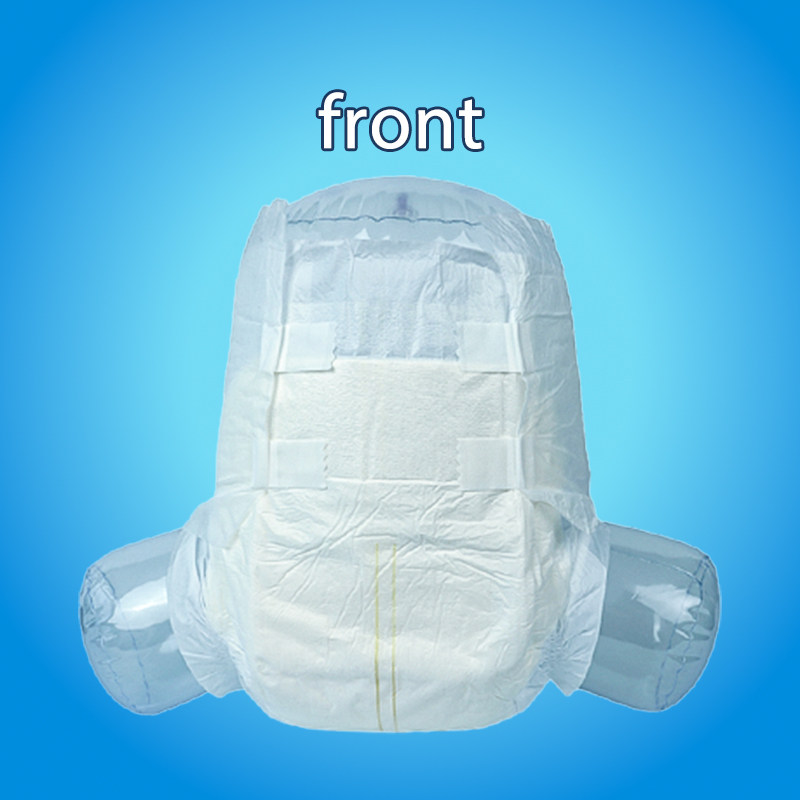
Customization transforms a basic sanitary pad into a highly engineered medical device. Adult Diapers require careful consideration across several functional dimensions.
The core dictates the overall performance. You must specify the fluff pulp to SAP ratios carefully. These ratios should match your target use cases. Active daytime products need thinner cores. They require faster absorption but lower total capacity. Heavy overnight protection demands maximum liquid retention. You need higher SAP concentrations for nighttime variants.
Implementing advanced Acquisition Distribution Layers (ADL) is equally crucial. The ADL pulls moisture away from the user quickly. It distributes liquid evenly across the core. This minimizes rewet incidents. It ultimately protects delicate skin integrity and prevents maceration.
Tactile experience drives consumer loyalty. Selecting the right external materials matters immensely. Cloth-like, breathable backsheets offer a premium feel. They reduce heat buildup against the skin. Standard polyethylene (PE) films are cheaper but feel crinkly. They often cause discomfort during extended wear.
Hypoallergenic non-woven topsheets are another essential upgrade. Elderly skin is notoriously fragile. Harsh materials cause friction and irritation. Specify ultra-soft, dermatologically tested fabrics for sensitive demographics.
The physical shape determines usability. Pull-up underwear styles mimic regular clothing. They suit active users managing moderate incontinence. Tab-style briefs cater to bedridden patients. Caregivers find them much easier to change.
You must engineer custom leak guards. Elastic leg cuffs need exact tension specifications. These components must fit specific demographic anthropometrics securely. Poorly fitted cuffs are the leading cause of side leakage.
Modern consumers expect innovative features. Wetness indicators are practically mandatory today. They change color upon contact with liquid. This signals caregivers precisely when a change is necessary. Odor-control treatments are also highly valued. They neutralize ammonia compounds organically. Anatomical shaping further improves discretion under clothing.
OEM Customization Comparison Chart
Customization Dimension | Standard White-Label Option | Advanced OEM Specification |
|---|---|---|
Core Absorbency | Pre-set fluff/SAP ratio | Custom ml capacity, targeted SAP placement |
Backsheet Material | Basic PE plastic film | Cloth-like, micro-porous breathable non-woven |
Leg Cuffs | Single elastic strand | 3D dual-layer hydrophobic leak guards |
Special Features | None | Wetness indicators, odor-neutralizing polymers |
Finding the right factory requires rigorous vetting. You cannot rely on marketing brochures alone. Buyers must systematically audit potential partners.
Assess the facility's baseline production capacity first. You need to know their exact line speed. Determine their monthly output limits in units. Ask how they handle sudden seasonal demand spikes. If your brand goes viral, can they scale quickly?
Evaluate their tooling capabilities as well. Custom products often require bespoke mold creation. Verify if they maintain in-house engineering teams. In-house teams reduce tooling delays significantly.
Medical devices demand strict compliance. The mandatory baseline is ISO 9001 for Quality Management. They must also hold ISO 13485 for Medical Devices. Do not compromise on these twin pillars.
Market-specific requirements require extra attention. Selling in the US mandates FDA registration. European markets require the CE marking. Other regions need local health ministry approvals. Ask factories to produce verifiable certificate numbers.
Best Practice: Independently verify FDA registration numbers on the official FDA database. Fraudulent certificates are unfortunately common in overseas manufacturing.
A factory is only as good as its suppliers. You must verify their Tier-2 supply chain networks. Ask where they source their SAP. Identify the exact origin of their non-woven fabrics. Top-tier factories use globally recognized chemical suppliers.
Discuss their risk mitigation strategies. How do they handle raw material shortages? A robust partner maintains safety stock of critical components.
Minimum Order Quantities (MOQs) dictate your initial capital requirement. Demand transparent pricing structures across varied order volumes. Pricing usually drops as volumes increase. Compare costs between a 20ft container and a 40ft HQ container.
You must balance the initial investment carefully. High upfront tooling costs might seem daunting. However, they often yield a lower long-term cost per unit. Calculate the breakeven point thoroughly.
Signing a contract is just the beginning. The actual implementation phase is fraught with predictable risks. Managing these risks protects your bottom line.
Initial prototypes often look flawless. Factories use their best engineers to craft them. They run machines at slow speeds to ensure perfection. This creates the infamous "Golden Sample."
Mass-production batches rarely match this initial quality naturally. High-speed manufacturing introduces variables. Tension changes cause fabric tearing. Glue application becomes inconsistent. You must contractually bind production quality to that approved sample. Specify exact acceptable variances in your agreement.
Internal factory testing is never enough. You must mandate third-party laboratory testing. External labs should verify total absorption capacity. They must test tensile strength of the side tapes. Skin sensitization tests are also non-negotiable.
Implement strict AQL (Acceptable Quality Limit) inspections before shipping. Hire independent inspectors to visit the factory. They should pull random cartons from the assembly line. If the defect rate exceeds the AQL threshold, halt the shipment.
First-time OEM orders take surprisingly long. You must factor in time for custom packaging printing. Printing cylinders take weeks to engrave. Raw material procurement often causes early delays. Specialized fluff pulp might be on backorder.
Customs clearance adds another layer of unpredictability. Port congestions happen frequently. Understand typical delays in new product rollouts. Buffer your inventory accordingly. Never launch a marketing campaign until the goods clear domestic customs.
A structured phased approach reduces capital risk. It protects your investment before full-scale commercialization. Follow this four-phase roadmap closely.
Phase 1: Discovery & Specification. Draft your exact technical brief. Document all requested materials. Set firm absorbency targets in milliliters. Create a detailed sizing chart for your target demographic. This Technical Data Sheet (TDS) becomes your foundational contract document.
Phase 2: Prototyping & Lab Testing. The factory produces iterative hand-made or slow-run samples. Receive these prototypes and inspect them rigorously. Conduct localized focus group testing. Have actual users wear them overnight. Gather qualitative feedback and refine the fit accordingly.
Phase 3: Trial Production (Pilot Run). Order a small manufacturing batch. This tests the factory's high-speed machine capabilities. It verifies packaging integrity under transit conditions. Launch this small batch to a limited audience. Measure the initial market response before committing heavy capital.
Phase 4: Mass Production & Optimization. Scale up your operations confidently. Finalize your Service Level Agreements (SLAs). Establish ongoing feedback loops. Gather customer reviews systematically. Use this data to plan your V2 product iterations.
Building a successful adult incontinence brand requires more than marketing. It is built on a transparent, highly capable OEM partnership. Generic white labels offer speed, but they sacrifice vital control. True customization allows you to meet precise consumer needs effectively.
Buyers must prioritize verifiable factory certifications above all else. Implement rigid QA testing protocols immediately. Build scalable, resilient supply chains. Never chase the lowest unit cost blindly, as it often sacrifices quality.
Take action today by drafting a formal technical specification sheet (TDS). Define your exact core requirements and material preferences. Once completed, request comprehensive capability audits from shortlisted adult diaper manufacturers. This proactive step ensures your product launch rests on a solid foundation.
A: MOQs vary significantly by manufacturer. They are generally tied to shipping container sizes to offset machine setup costs. Expect an MOQ of roughly one 20ft container per size or SKU. This typically equates to about 30,000 to 50,000 pieces per size.
A: A standard launch timeline spans 3 to 6 months. This accounts for iterative prototyping and finalizing custom packaging design. It also includes procuring specialized raw materials and the initial mass production lead times. Shipping and customs clearance require an additional 4 to 6 weeks.
A: Compliant manufacturers hold necessary facility-level certifications (like ISO 13485). They provide vital documentation for your application. However, the brand itself must still register as the official distributor or product owner in the target market.
A: OEM (Original Equipment Manufacturer) means the brand dictates exact custom specifications, controlling the product's design. ODM (Original Design Manufacturer) means the factory provides an existing, pre-designed product. The brand simply places its label on this existing architecture without making structural changes.