

T:+86-13599748866
E:vincewu@babyard.com.cn
E:vincewu@babyard.com.cn
5th floor, Financial Innovation Plaza, 8-2 Pusi Road, Jiangbei New District, Nanjing
Friendly link (QQ: 3004257586)
Friendly link (QQ: 3004257586)
Views: 0 Author: Site Editor Publish Time: 2026-07-23 Origin: Site


Selecting the right incontinence product is rarely a one-size-fits-all process. The wrong choice often leads to skin breakdown. It can compromise dignity and cause frequent leaks. It also increases caregiver fatigue significantly.
Finding the perfect fit requires careful evaluation. You must match the product to specific mobility levels. Care environments and output volumes also dictate the best solution. We provide a clinical and practical evaluation of these options. You will learn how to choose between tab-style and pull-up designs effectively.
In clinical and hospital settings, professionals use specific terminology. They often call Adult Diapers incontinence briefs or tab-style briefs. Meanwhile, pull-ups are widely known as protective underwear. We use these terms interchangeably for clarity throughout this guide.
Mobility is the primary filter: Adult pull up pants are designed for ambulatory individuals who can dress themselves; tab-style adult diapers are engineered for users with limited mobility or those who require caregiver assistance.
Absorbency limits vary by design: Tab-style diapers generally offer higher maximum absorbency and better containment for bowel incontinence compared to pull-ups.
Caregiver ergonomics matter: Tab-style briefs allow for changes without removing the user’s trousers or shoes, minimizing physical strain on caregivers for bedridden or wheelchair-bound users.
Fit dictates performance: A higher-priced product will still leak if the leg gathers are sized incorrectly or the style does not match the user's anatomical needs.
Understanding product construction helps families and clinics make better choices. Each style targets distinct anatomical and lifestyle requirements. Manufacturers build them using different core philosophies.
These garments closely resemble standard cloth underwear. They feature a continuous elastic waistband. Users step into them and pull them up. This familiar motion provides a significant psychological advantage. It reduces the stigma associated with incontinence products.
Early-stage users heavily prefer protective underwear. They appreciate the discreet profile under normal clothing. Most modern pull-ups also incorporate tear-away side seams. Caregivers can rip these seams for fast removal. However, applying a fresh pair still requires stepping into it.
These products utilize an open-flat design. You secure them using refastenable tabs on the sides. The tabs usually feature strong adhesive tape or hook-and-loop closures. This mechanism provides a highly customizable fit.
You can adjust the waist and leg openings independently. This creates a much tighter seal against sudden leaks. Medical facilities strongly prefer this specific design. Long-term care units rely on them daily. They make changing immobile patients significantly easier and safer.
Pull-ups offer excellent independence for the right user. They prioritize normalcy and active daily living. However, they do have strict performance boundaries.
Highly mobile individuals managing light to moderate urinary incontinence.
Independent dressers who follow a regular toileting schedule.
Users relying on products as a backup for minor accidents.
Patients recovering from surgery who value extreme discretion.
Individuals diagnosed with conditions like overactive bladder (OAB).
You should avoid pull-ups for bowel incontinence. The design lacks essential structural containment. It also fails to provide adequate odor barriers for heavy fecal voids. The elastic bands cannot trap solids securely.
Changing away from home presents a major logistical challenge. Users must completely remove their shoes and trousers. Putting on a fresh pair in a public restroom is inconvenient. It often creates anxiety for active individuals.
Pull-ups also rely on fixed sizing. They cannot adjust to body changes quickly. If a user experiences abdominal bloating, the waistband feels tight. If they lose weight, the leg gathers will sag and leak.
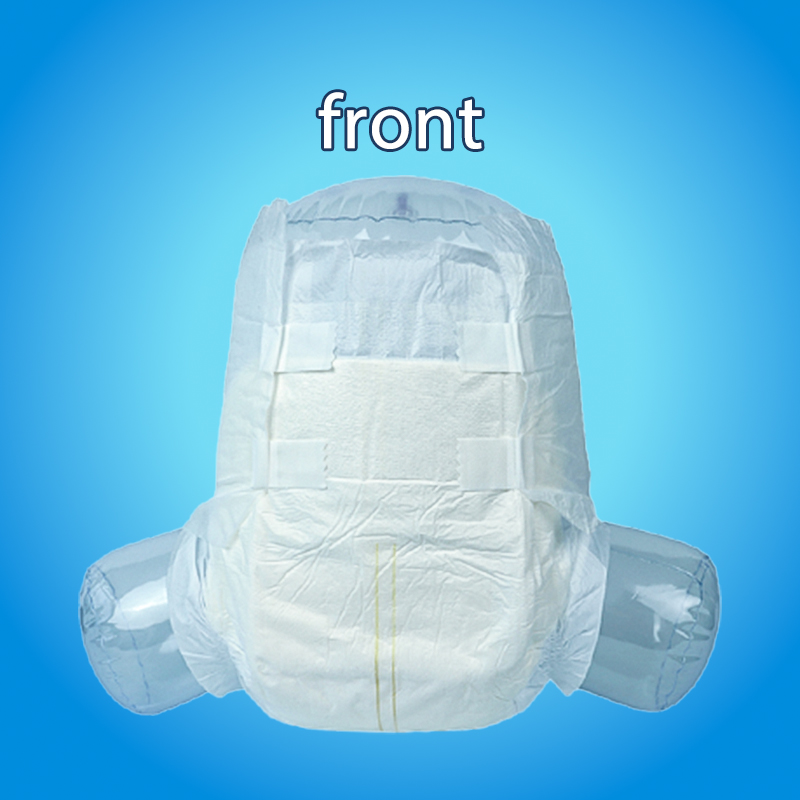
Tab-style products dominate the heavy-absorbency market. They handle complex clinical needs efficiently. They also protect caregiver health during daily routines.
Bedridden individuals and full-time wheelchair users.
Patients with severe mobility or cognitive impairments.
Heavy to severe urinary incontinence management.
Overnight use to prevent sleep disruptions.
Bowel incontinence requiring maximum containment.
Users entirely reliant on caregivers for daily hygiene.
These garments offer a massive caregiver advantage. You can apply them while the user lies flat. You can also apply them while the patient stands. Caregivers never need to remove the user's lower-body clothing. This reduces back strain and physical exertion.
Adult Diapers provide superior containment capabilities. You can tighten the lower tabs firmly. This ensures the inner leg guards sit flush against the groin. Flush leg guards significantly reduce severe leak risks.
However, stigma remains a notable implementation barrier. These items look bulkier under fitted clothing. Cognitively intact users often resist transitioning to them. They associate tab-style closures with infant products. Caregivers must navigate this psychological barrier with deep empathy.
Selecting between styles requires a systematic approach. You must evaluate the user's daily reality accurately. We recommend using this four-point framework.
Mobility dictates the baseline product choice. Observe how the user navigates their bedroom or bathroom. Apply a simple rule of thumb here. Can they easily lift their legs? Can they balance while standing? Can they grip a tight waistband securely?
If the answer is no, rule out pull-ups entirely. However, consider fine motor skills like pinch grip. A user might have severe arthritis in their hands. They cannot pinch or pull small adhesive tabs. If they can still stand safely, pull-ups may actually be better.
You must assess the nature of the incontinence. Determine if the user experiences occasional urinary dribbles. Compare this to full bladder voids, known as surge incontinence. Basic pull-up pants handle slow dribbles well. They absorb moisture gradually without leaking.
Surge incontinence overwhelms fixed-waist designs quickly. Fecal containment also requires specialized barriers. Always route heavy, surge, or fecal needs to tab-style adult diapers. They feature taller leak guards to trap rapid output.
Many families benefit from a strategic hybrid approach. You do not have to pick just one style. Use comfortable pull-ups during the day. This encourages natural bathroom usage. It helps maintain the user's dignity during social hours.
Transition to high-capacity tab-style briefs at night. Nighttime products require massive fluid capacities. Tab-style products prevent bedsheet leaks effectively. They ensure the user enjoys uninterrupted sleep. Restful sleep accelerates healing and improves overall mood.
Medical funding heavily influences long-term choices. Always verify coverage with your specific insurance provider. Medicaid and private insurers maintain strict product formularies. They classify products based on medical necessity criteria.
Tab-style briefs usually qualify for coverage easily. Providers view them as essential medical supplies. Insurers sometimes classify pull-up styles as optional lifestyle products. Obtaining approval for pull-ups often requires extensive physician documentation.
Incontinence Product Feature Matrix
Feature / Capability | Protective Underwear (Pull-Ups) | Tab-Style Briefs |
|---|---|---|
Application Method | Step-in and pull up | Open flat, secure with side tabs |
Bowel Containment | Poor to Moderate | High to Excellent |
Adjustability | Fixed elastic stretch | Highly customizable waist/legs |
Clothing Removal Needed? | Yes (Pants and shoes) | No |
Even premium items fail if implemented poorly. Families often encounter standard pitfalls during transitions. Education prevents unnecessary discomfort and financial waste.
Many buyers falsely believe sizing up yields more absorbency. They buy larger sizes hoping to stop nighttime leaks. This misconception causes endless frustration. A loose fit guarantees severe leaks through the leg gathers.
Fluid follows the path of least resistance. Gaps around the thighs let urine escape immediately. Always measure the user by their hips and waist. Use a flexible tailor's tape for accuracy. Never rely solely on their standard clothing size.
Trapped moisture creates severe skin breakdown risks. Professionals call this Incontinence-Associated Dermatitis. Urine alters the skin's natural pH level. Friction from walking exacerbates the irritation rapidly.
Tab-style diapers allow for better breathability adjustments. Caregivers can easily open them to apply thick barrier creams. Tight pull-ups often trap moisture tightly against the skin. If users do not change them promptly, IAD develops quickly.
Mainstream drugstore brands heavily dominate television advertising. Brands like Depend offer convenience and accessibility. However, they frequently fail heavy-incontinence users. Frustrated users often think they must switch to tab-style products immediately.
This is not always true. They may simply need to upgrade their product tier. Premium medical-grade pull-ups contain higher SAP concentrations. Super Absorbent Polymer turns liquid into dry gel. Transitioning to high-SAP clinical pull-ups often solves leakage without sacrificing dignity.
Your choice fundamentally impacts daily comfort and caregiving routines. Select pull-ups to maximize user independence and daily discretion. Choose tab-style products for ultimate caregiver efficiency and high absorbency needs. Observe the user's mobility limitations honestly to guide your selection.
Take immediate action by measuring the user's waist and hips today. Use a soft tailor's tape for precise numbers. Next, order sample packs of both premium pull-ups and tab-style briefs. Test their fit and ease of changing in real-world scenarios. Conduct these trials before committing your budget to bulk cases.
A: No, you should never layer incontinence products this way. Layering causes immediate compression leaks. The outer pull-up squeezes the inner product, forcing liquid out the sides. If you need extra capacity, we highly recommend using specialized absorbent booster pads inside a single well-fitting garment instead.
A: Tab-style briefs are generally the best option for overnight use. Look for premium models containing heavy Super Absorbent Polymer (SAP) content. These high-capacity cores trap moisture as a dry gel. They prevent sleep disruption, stop bedsheet leaks, and protect vulnerable skin from severe maceration throughout the night.
A: Start by changing your vocabulary. Use medical terminology like "protective underwear" or "briefs." Emphasize the goal of "staying dry" rather than preventing accidents. Introduce pull-ups first to ease the psychological transition, as they look like regular underwear. Validate their feelings while focusing on their physical comfort.